We Called the Escalation. It Happened. Oil Still Hasn't Priced It.
By The Intelligence Edge Research Team · July 13, 2026 · 18 min read
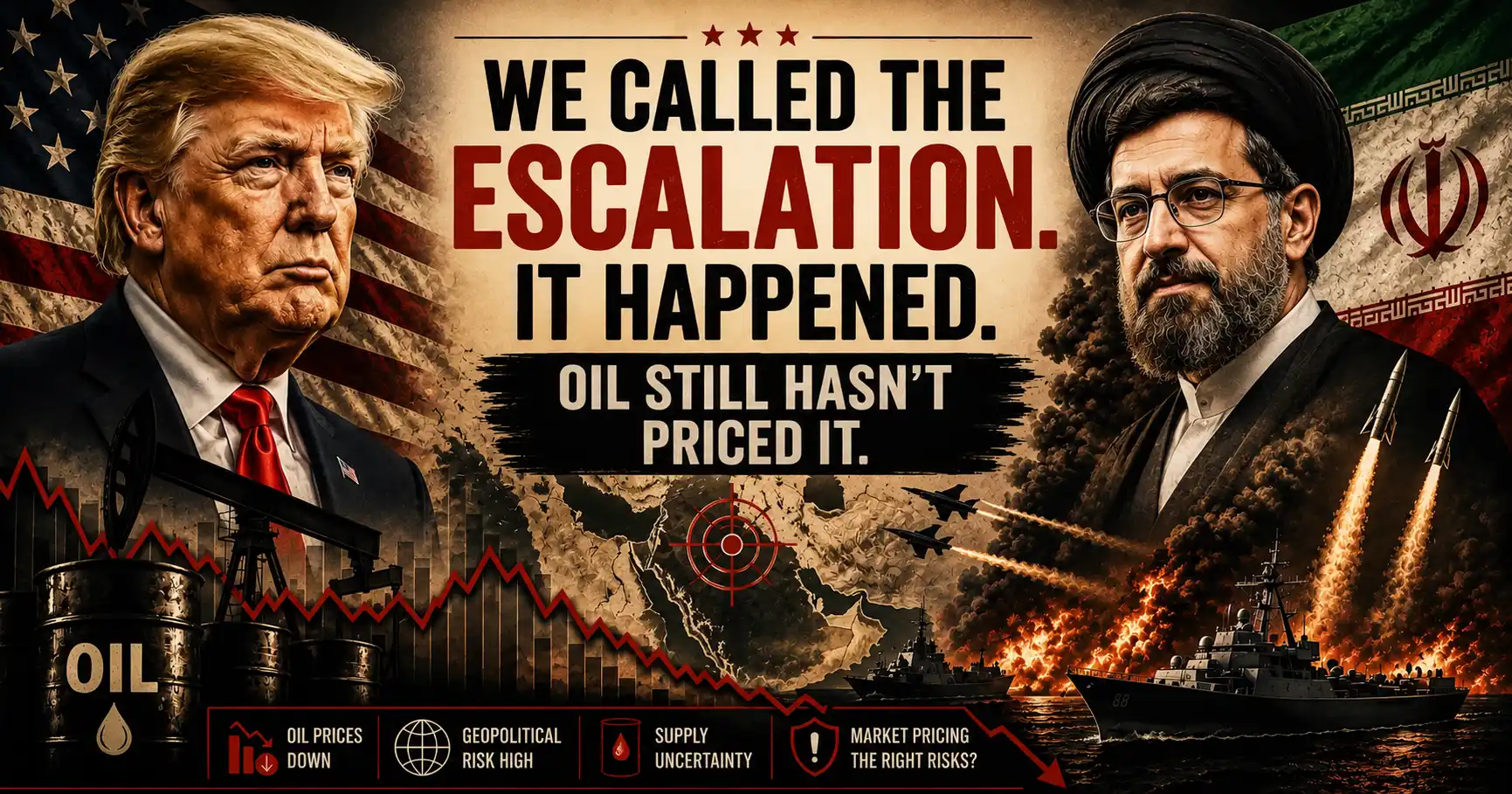
Every trigger we named for renewed escalation has now fired: tankers hit in Hormuz, sanctions back, the ceasefire dead. Brent is up 5%, not the 30%+ we flagged
Three weeks ago we named the exact conditions that would mean the ceasefire was breaking and oil was about to reprice violently. Every one of them has now happened. Brent is up five percent. Here is why the market still isn't behaving like Part 1 said it would — and whether that means we were wrong, or early.
On 28 June, in an update filed hours after we published Oil Has Fallen Faster Than Geopolitical Risk, we watched the ceasefire between the United States and Iran come apart in real time. We labelled the scenario already in motion "Renewed Escalation" and gave it a Brent range of $95 to $130+, with a specific checklist of what would confirm it: a failed extension of the sanctions waiver due 21 August, a second maritime incident in the Strait of Hormuz, and war-risk insurance premiums for Gulf shipping spiking again.
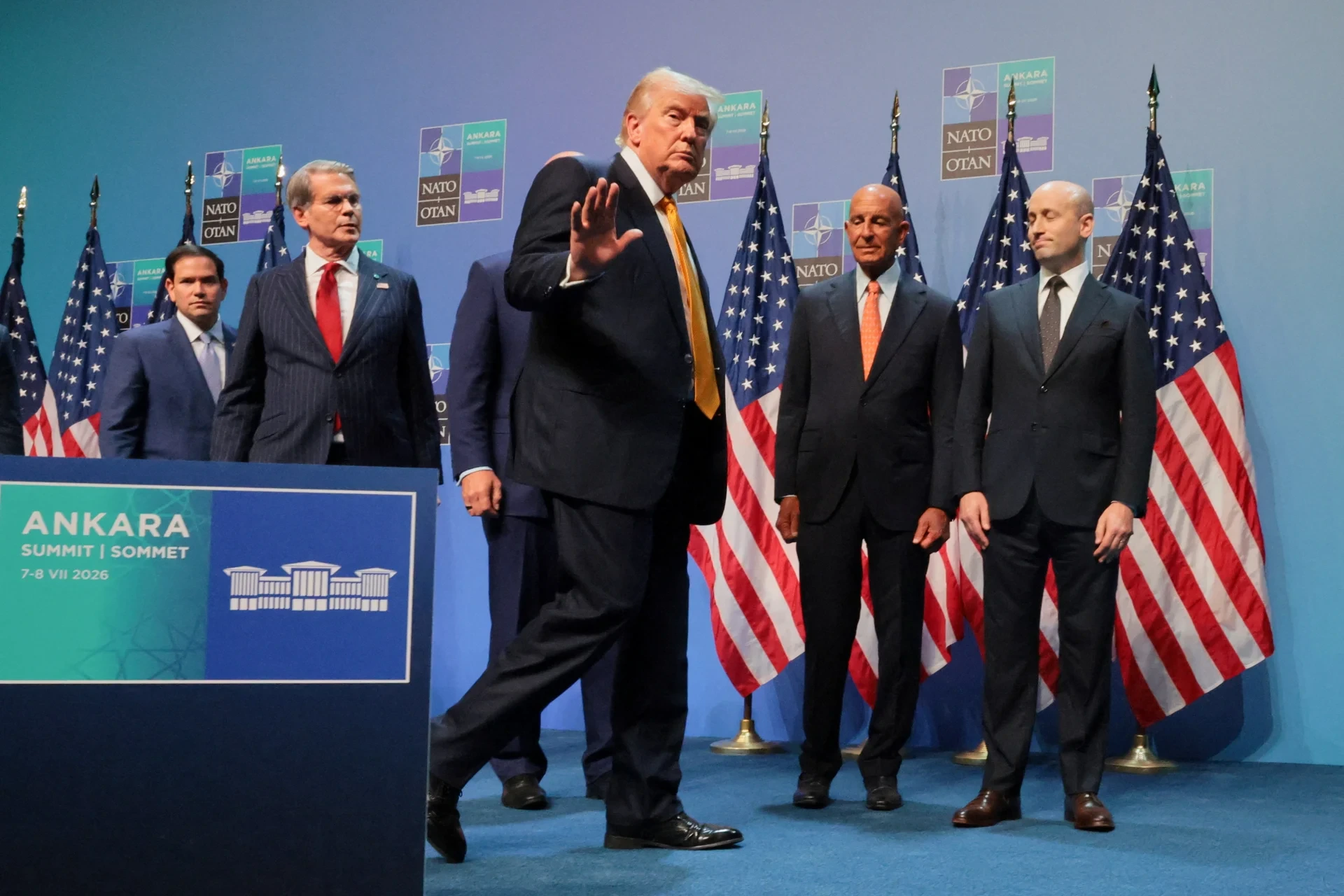
Between 7 and 8 July, all three fired at once. The US Treasury revoked Iran's oil-export waiver. The US struck more than eighty targets inside Iran. Three commercial vessels — the LNG carrier Al Rekayat, the Saudi-flagged supertanker Wedyan, and a third ship hit by the IRGC the following day — took fire inside the strait. Iran's Revolutionary Guard claimed retaliatory strikes on dozens of US-linked sites across Bahrain and Kuwait. At the NATO summit in Ankara, President Trump said plainly that he considered the ceasefire over.
By every trigger we named, this is the scenario. And yet Brent crude, which sat at $72.71 when we filed the June update, closed on 12 July at roughly $76 — a real move, but a fraction of the $95–130 band we flagged as the marker of a market waking up to what had actually happened. This piece is a report card. It grades our own forecast against three weeks of hard events, and then asks the harder question: is the market still asleep, or does it know something Part 1 didn't?
- Our own trigger conditions all fired. Waiver revoked, second (and third) maritime incident, war-risk insurance premiums roughly doubling — the exact checklist from Part 1, checked off inside two weeks.
- The price response has been muted relative to the scenario. Brent is up about 5% since the June low, not the 30%–80% the Renewed Escalation band implied.
- The gap has a real explanation, not just complacency. Gulf exporters routed a surge of barrels around Hormuz in June, and tankers are still transiting via a US-protected corridor despite the attacks — this is being priced as harassment, not blockade.
- Oil-specific fear has actually spiked hard. The CBOE crude oil volatility index (OVX) jumped 18% to a multi-month high even as broader equity volatility barely moved — the options market is not nearly as calm as the spot price suggests.
- The distinction that matters now is Contained Harassment versus Full-Fledged War — and the difference between those two futures is not diplomacy. It is whether Israel and the US move from deconfliction to open joint action, not just whether Iran can close the strait.
What We Said, and What Happened
Grading a forecast only means something if you show the checklist before you show the outcome. Here is the exact language from Part 1's Renewed Escalation scenario, next to what the record now shows.
| Trigger we named (28 June) | What actually happened |
|---|---|
| "A failed waiver extension on 21 August." | Came early. The US Treasury revoked the waiver outright on 7 July, six weeks ahead of the deadline we were watching. |
| "A second maritime incident." | Three separate vessels were struck inside the strait on 7–8 July, and the International Maritime Organization advised ships to avoid the waterway entirely. |
| "War-risk insurance premiums for Gulf shipping spiking again." | Hull war-risk premiums, which had eased to roughly 2% of vessel value after the June memorandum, moved back toward 5% within days of the attacks. |
On the checklist, Part 1's forecast was correct in every particular. What it did not anticipate — and what the rest of this piece investigates — is that meeting the trigger conditions and repricing to the scenario's dollar range turned out to be two different things.
The Timeline: Two Weeks From Pause to Confirmed Escalation
- 17 JUN 2026US–Iran memorandum signedBlockade lifted, 60-day waiver opens. Brent falls toward $73.
- 28 JUN 2026Ceasefire first breaksUS strikes Iran a second time after the tanker MT Kiku is hit. Part 1's update is filed the same day.
- 7 JUL 2026Treasury revokes the oil waiver; tankers hitAl Rekayat and Wedyan struck by projectiles inside the strait; the US launches strikes on more than 80 Iranian targets.
- 8 JUL 2026Trump declares the ceasefire "over" at NATO's Ankara summitA third vessel is hit; the IRGC claims retaliatory strikes on dozens of US-linked sites in Bahrain and Kuwait.
- 10–12 JUL 2026Tankers keep moving — on a narrower routeVessels are tracked transiting via the Omani side of the strait under a US-protected corridor even as the IMO advises avoidance. Brent settles near $76.
The Two Fronts Nobody's Pricing In
Israel Was Never in the Room
It is worth saying plainly, because the ceasefire coverage tends to bury it: Israel was not a signatory to the 17 June memorandum, and it has never been a passive bystander in this war. The opening strikes on 28 February — which killed Iran's Supreme Leader, Ali Khamenei — were a joint US–Israeli operation from day one. Much of the international press has covered this from the start as a US–Israel campaign against Iran, not a US-only one; Al Jazeera's own running coverage is filed under the header "US–Israel war on Iran." Every scenario below that assumes Washington alone decides how far this goes is missing half the decision-makers.
That matters because Israel's calculus is not Washington's. The US has an interest in stabilizing oil markets and containing a war that keeps interrupting its attention elsewhere. Israel's stated objective — degrading Iran's nuclear and missile programs on a lasting basis — has no natural stopping point at "the strait stays open." A ceasefire that suits Washington's bandwidth does not automatically suit Jerusalem's.
A Second Front the Market Isn't Pricing At All
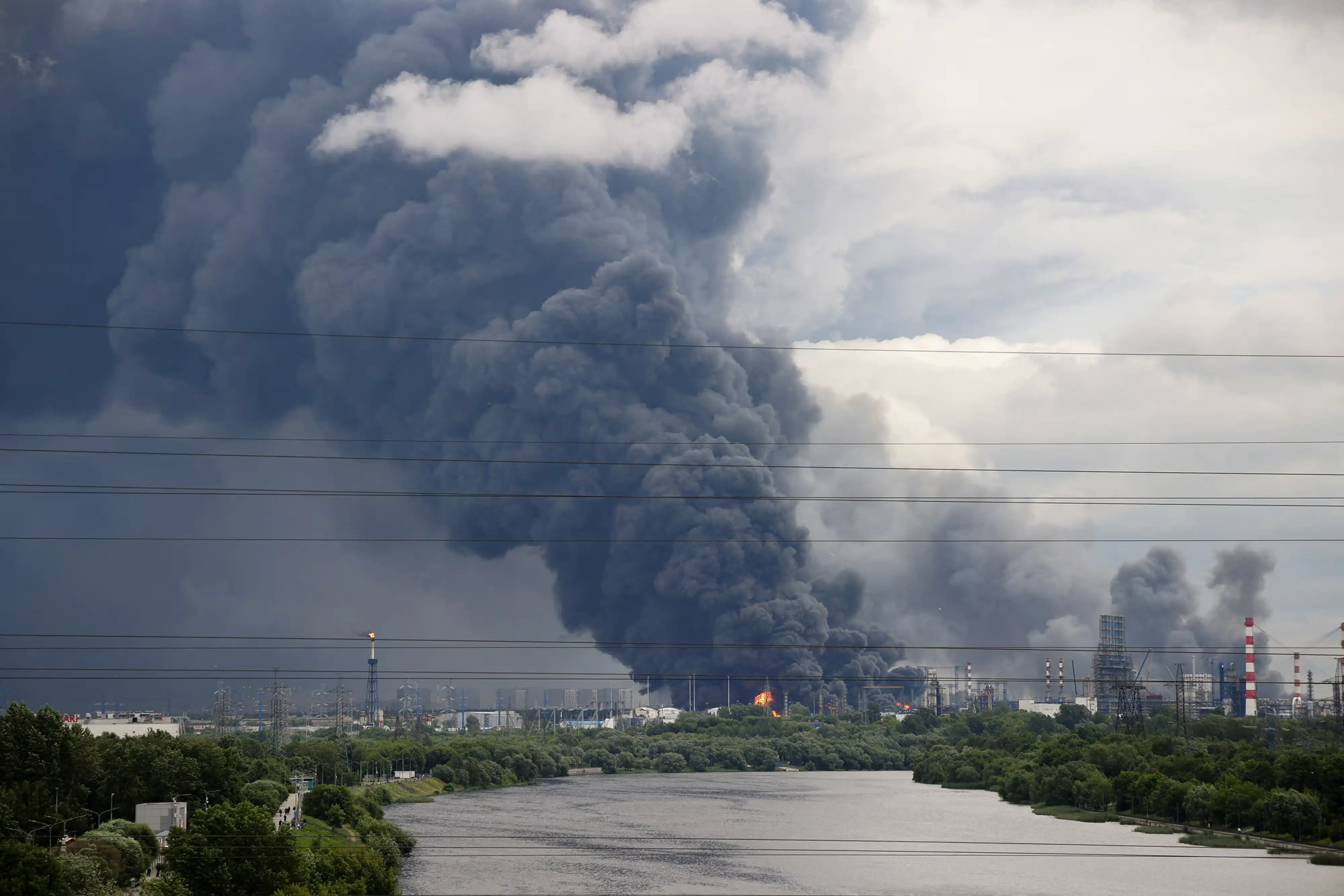
On 6 July, Russia hit Kyiv with 68 missiles and 351 attack drones, killing at least 24 people, in one of the largest barrages of the war — timed days before the NATO summit in Ankara where President Trump would go on to declare the Iran ceasefire "over." Days later, a Russian-launched drone struck an apartment building in Romania, a NATO member — and Bucharest identified it as a Geran-2, the Russian-built version of Iran's own Shahed design. Reporting also indicates that broader Russia–Ukraine peace talks, pushed by Washington, have been stalled specifically because the Iran war has consumed the administration's attention.
None of this means Moscow and Tehran are coordinating — there is no evidence of that, and we are not asserting it. What is verifiable is narrower and still significant: the United States is now managing two live, escalating fronts at once, and the adversary on one of them is flying drones descended from the other's own design. Whether that stretched bandwidth makes Washington more cautious about a third escalation with Iran, or more eager to close it out quickly so it can pivot back to Europe, is exactly the kind of question that decides whether the next quarter looks like Contained Harassment or something considerably worse.
So Why Is Oil Only at $76, Not $95–130?
This is the question Part 1's framework demands we ask honestly, rather than assume away. There are four real reasons the price has not caught up to the scenario — and only one of them is a fragile one.
Reason one: Gulf producers built a bypass, and used it. Total Gulf oil exports — including volumes that route around the strait entirely, via the Saudi East–West pipeline and UAE lines to Fujairah — surged by roughly 6.5 million barrels a day in June to about 16.1 million, according to the IEA's July Oil Market Report. That is the single biggest reason this crisis has not behaved like March's did: this time, a meaningful share of Gulf crude never has to touch the contested waterway at all.
Reason two: this is harassment, not closure. In March, Iran achieved what state media called "complete control" of the strait and shipping effectively stopped. In July, tankers are still crossing — slower, at higher insurance cost, on a narrower Oman-side corridor, but crossing. Bloomberg tracked supertankers making the transit within hours of the latest attacks. The market is pricing a waterway that is dangerous and expensive to use, not one that is shut. That is a real distinction, and it is the market's actual thesis right now, whether or not it survives the next incident.
Reason three: the options market is hedging $80–85, not $95–130. The heaviest open interest in September Brent options sits at the $80 and $85 strikes. That tells you where professional money is actually positioning for risk to land — a firmer, more dangerous oil market, but not yet the scenario band we flagged. If institutions believed a full Hormuz closure was the base case, that concentration would sit much higher.
Look past the flat spot price and the picture changes. The CBOE's oil volatility index, OVX, jumped 18% to roughly 47.6 after the 7–8 July strikes, while the S&P 500's VIX barely moved. That gap — oil-specific fear spiking while broad-market fear shrugs — is the market quietly agreeing with Part 1's original point: this is not equity-market complacency. It is a bet, confined entirely to the oil desk, that Gulf bypass capacity and the Oman corridor hold long enough for the diplomacy to catch back up.
That is a real, analyzable position. It is also a bet with a specific failure mode: it only works as long as Iran chooses to harass shipping rather than seriously attempt to close the strait outright. Nothing observed so far tells us which one Tehran is actually doing.
Reason four (the fragile one): the 2027 surplus narrative never went away. The IEA's demand-contraction and 2027 supply-surplus forecasts that formed the strongest bear case in Part 1 are still on the table, and every desk repricing Gulf risk today is doing so against a backdrop that still expects the market to be oversupplied within eighteen months. That is the assumption doing the most work to keep a lid on this rally — and it is also the one most disconnected from what is happening on the water this week.
Has Our Thesis Changed?
Part 1 ended with a single line: markets are not pricing peace, they are pricing temporary stability and calling it peace. Nothing in the past three weeks contradicts that — if anything, the ceasefire being declared "over" by the US president is about as clean a confirmation as a forecast gets. What we did not fully anticipate is that "temporary stability" would survive its own collapse. Gulf bypass infrastructure and a narrower but still-functioning shipping corridor mean the physical market has more slack in it than the March playbook suggested, even with the political situation objectively worse.
We are not revising the direction of the thesis. We are revising its speed. The floor under this market is firmer than $73 for as long as tankers keep taking fire in the strait. But the ceiling is lower than our original $95–130 band implies, for as long as bypass barrels and the Oman corridor keep functioning. The risk premium did not fail to return — it returned smaller, and it is now a live test of exactly how much of Hormuz Iran can actually take offline versus how much it can only make expensive.
Updated Scenarios: The Next Quarter From Here
Part 1's three scenarios described paths away from the 26 June calm. With Renewed Escalation now the confirmed state of the world, the useful question has shifted to what happens from here. These are scenario sketches, not predictions — author analysis, explicitly labelled as such.
Iran continues intermittent strikes on shipping and holds Hormuz as a standing threat rather than a closed waterway. Bypass exports and the Oman corridor keep the bulk of Gulf crude flowing at a cost premium. Insurance and freight costs stay elevated; the price grinds higher on a string of incidents rather than spiking on one.
Israel — already a direct combatant since the 28 February opening strikes — moves from Lebanon-focused operations into open, acknowledged joint action with the US against Iran's remaining military and nuclear infrastructure. This is the scenario where "harassment" stops being a stable equilibrium, because Tehran's calculus shifts from "raise the cost of using Hormuz" to an existential fight on two fronts at once. It is also the scenario the options market's $80–85 strike concentration is not currently paying for at all, which is exactly what would make it violent if it arrives.
A new waiver or backchannel de-escalation restores the June truce faster than the market expects, and the barrels stockpiled during the earlier blockade return alongside a Saudi fight for market share. As in Part 1, this remains the scenario least positioned for and most likely to surprise to the downside.
Probabilities are the author's subjective estimates for framing only, not statistical forecasts.
What to Watch Next
- Attacks on bypass infrastructure. The single highest-signal event now is any strike on the Saudi East–West pipeline, Fujairah, or Ras Tanura — the routes making Contained Harassment possible.
- War-risk insurance premiums. Still the fastest, least emotional readout of Hormuz risk. Watch whether they stabilize near 5% or keep climbing.
- OVX versus VIX. As long as oil-specific volatility keeps rising while equity volatility stays calm, the market is treating this as a commodity story, not a macro one — that can change fast.
- Tanker transit counts on the Oman corridor. The real-time test of whether harassment is holding or tipping toward closure.
- The options strike concentration. If open interest starts building meaningfully above $90–$100, it means professional money is repricing toward the Full-Fledged War case.
- Israeli acknowledgment of direct strikes. Any confirmed, publicly acknowledged Israeli strike on Iranian soil beyond the 28 February opening campaign is the clearest signal the Full-Fledged War scenario is arriving.
- Russian strikes on NATO territory. A second incident like the Romania drone strike would confirm Washington is genuinely fighting on two fronts at once, not a one-off.
Frequently Asked Questions
Was the Part 1 forecast wrong?
The trigger conditions were correct and arrived faster than the 21 August deadline we flagged. The dollar range was too aggressive for what has actually happened so far, because it assumed a trigger event would produce a March-style closure. Instead Iran has pursued harassment rather than closure, and Gulf bypass capacity absorbed more of the shock than the original scenario priced in.
Is the Strait of Hormuz closed?
No. Tankers are still transiting, primarily via a narrower, US-protected corridor on the Omani side, though the International Maritime Organization has advised ships to avoid the waterway and at least three vessels were struck in early July.
Why hasn't oil spiked if tankers are being attacked?
Largely because Gulf exporters have routed a surge of barrels around the strait entirely via pipeline, and because the options market is currently pricing this as an elevated-risk environment ($80–85 strikes) rather than a supply-shock one. Oil-specific volatility (OVX) has spiked sharply even though the spot price has not, which suggests the market sees this as a live, unresolved risk rather than a non-event.
What would change the thesis to a full spike scenario?
A strike on the bypass infrastructure itself — the Saudi East–West pipeline or the Fujairah terminal — or a mine or sunk vessel actually blocking the shipping channel. Either would remove the mechanism currently keeping Brent in the $75–$92 range rather than the $100+ range.
Is Israel involved in this war beyond the ceasefire dispute?
Yes, directly. Israel was not a signatory to the 17 June US–Iran memorandum, and it has been a combatant since the war's opening strikes on 28 February, which killed Iran's Supreme Leader and were a joint US–Israeli operation. Major outlets have covered the conflict as a "US–Israel war on Iran" from the start, not a US-only campaign.
What does the Russia–Ukraine war have to do with oil and Iran?
Two things, both verifiable and neither implying coordination between Moscow and Tehran: the drone Russia used to strike a NATO member's territory (Romania) was identified as a Geran-2, the Russian-built version of Iran's own Shahed design; and Russia–Ukraine peace talks are reported to be stalled specifically because the Iran war has consumed US diplomatic bandwidth. The US is managing two live fronts at once, which is itself a variable worth watching.
Is this article investment advice?
No. It is an analytical framework for thinking about risk, not a recommendation to buy or sell any security or commodity. The scenarios and probabilities are the author's subjective analysis. Do your own due diligence and consult a qualified financial adviser before making any investment decision.
- Oil Has Fallen Faster Than Geopolitical Risk — Part 1 of this series: the original mispricing thesis and the Renewed Escalation scenario graded above.
- H2 2026: The Three Risks We're Watching — Oil, AI, and the Debt Wall — how the depleted oil market fits alongside AI concentration and the debt wall.
This analysis distinguishes throughout between documented fact, market consensus, market-implied pricing, and the author's own analysis and scenario work. Figures are current as of 12 July 2026. It draws on:
- International Energy Agency — Oil Market Report (July 2026): Gulf export volumes, bypass capacity, inventory data.
- CNN, NPR, Al Jazeera — live coverage of the 7–8 July strikes, the Treasury waiver revocation, and President Trump's remarks at the NATO Ankara summit.
- Bloomberg — tanker tracking through the Strait of Hormuz, 8–10 July 2026; options positioning at the $80/$85 September Brent strikes.
- Howden Re; reporting via GlobalSecurity.org and People's Daily (11 July 2026) — Hormuz war-risk insurance premium data.
- Saxo Bank Options Brief (8 July 2026) — OVX and VIX readings following the strikes.
- International Maritime Organization — shipping advisory on the Strait of Hormuz.
- Wikipedia — "2026 Iran war" and "Twelve-Day War": confirmation that the 28 February opening strikes were a joint US–Israeli operation.
- Al Jazeera — running "US–Israel war on Iran" coverage.
- France 24; Newsweek; ABC News — Russian strikes on Kyiv (6 July 2026, 68 missiles/351 drones) and a Russian Geran-2 drone strike on Romania, a NATO member.
- ICE Brent futures — price path, June–July 2026.
This article is for educational and informational purposes only and is not investment advice. It does not constitute a recommendation to buy or sell any security, commodity or financial instrument. Markets are volatile and you can lose money. Do your own due diligence and consult a qualified financial adviser before making any investment decision.